This summer, scorching heat has swept across the globe, with many countries and regions experiencing record-breaking temperatures and raging wildfires. In August, wildfires broke out on the Hawaiian island of Maui; before people could fully recover from what seemed like an “end-of-the-world” scene, another wave of extreme heat descended with force, leaving Europe and North America trapped in a blistering heatwave.
In Southern Europe, according to reports, as of 30 August Greece has suffered the most severe losses from forest fires in Europe, with more than 161,000 hectares of land burned and estimated damage reaching €1.66 billion. Spain has been the second hardest hit, with around 84,315 hectares burned and estimated losses of €871 million, followed by Italy and Portugal.
In North America, the latest data released on the 3rd by the Canadian Interagency Forest Fire Centre shows that more than 6,100 forest fires have occurred in Canada so far this year. Nationwide, 1,085 wildfires are still burning, of which 713 are classified as out of control. Government officials predict that due to widespread drought, the wildfire season may extend into the autumn.
The ASEAN region has not been spared either. Due to prolonged heat and drought, forest and land fires continue to rage across six provinces in Sumatra and Kalimantan in Indonesia. As a result, the number of patients with respiratory diseases in the country has increased by around 20%. According to the South Sumatra Health Office, there were 4,000 more respiratory cases last month than in the previous month, while nearly 190,000 people in South Kalimantan have reported respiratory problems. Due to poor air quality, the capital Jakarta was ranked among the world’s ten most polluted cities on many days last month.
In Thailand, under the combined impact of global warming and the El Niño phenomenon that emerged in 2023, the Kasikorn Research Center forecasts that in the second half of the year the total losses for major crops may reach about 48 billion baht. Rice is expected to suffer the greatest damage, with losses estimated at 37.631 billion baht, accounting for roughly 80% of total losses in the agricultural sector.
There is no doubt that global warming is happening faster than many had anticipated. World Meteorological Organization (WMO) Secretary-General Petteri Taalas has stated that, in the context of a warming climate, increasingly frequent extreme weather events are having a profound impact on human health, ecosystems, the economy, agriculture, as well as energy and water supplies. This underscores the urgent need to reduce greenhouse gas emissions as swiftly and as deeply as possible.
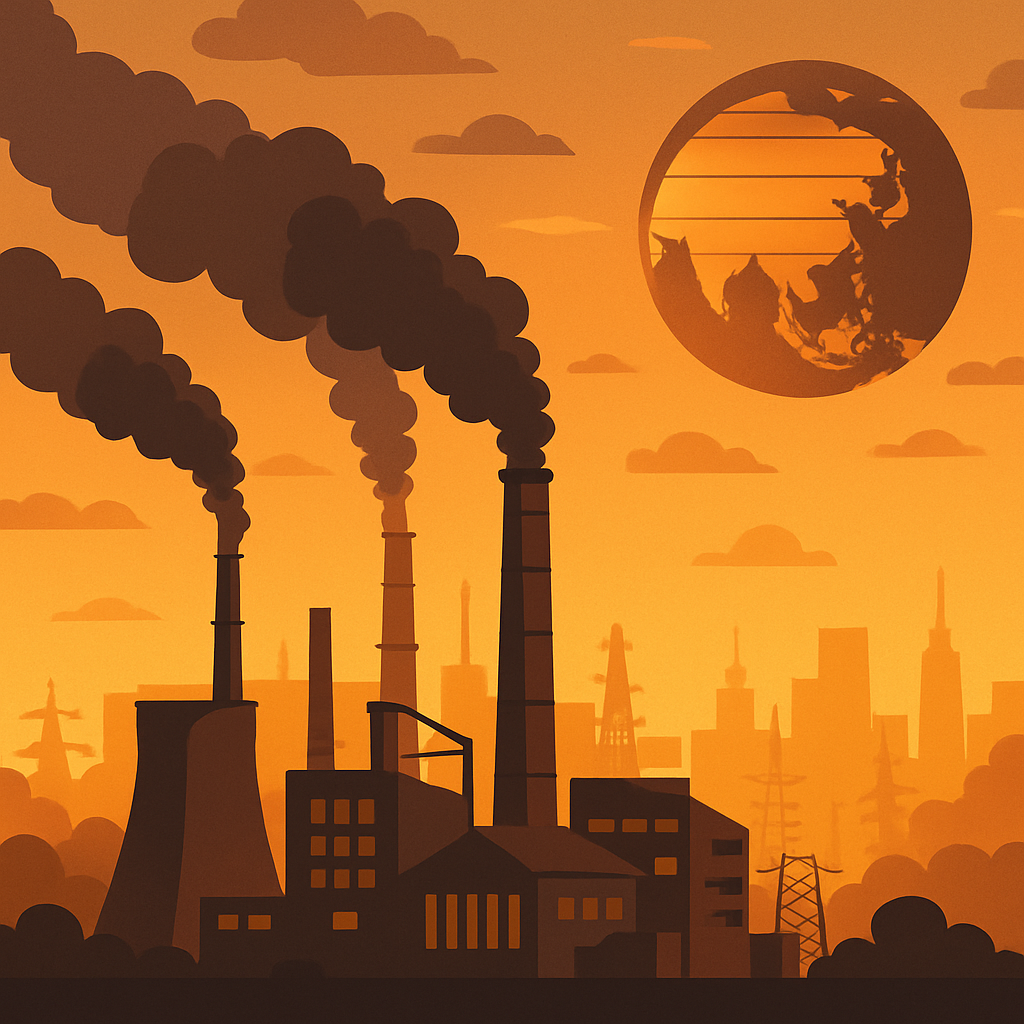
On the 8th of this month, the United Nations released its “Global Stocktake” report on the implementation of the 2015 Paris Agreement. The report points out that over the past eight years, countries have made only limited progress in preventing the worst consequences of climate change. Although their self-determined emission reduction plans have helped to slow the growth of greenhouse gas emissions, they remain far from sufficient to avert climate catastrophe.
The report also calls on countries to reduce their use of coal-fired power. By 2030, coal power consumption must be cut by 67% to 92% compared with 2019 levels, with the aim of completely phasing out coal-fired power generation by 2050. By the middle of this century, low-carbon and zero-carbon electricity should account for 99% of global power generation, and the technological challenges that hinder carbon capture must be resolved.
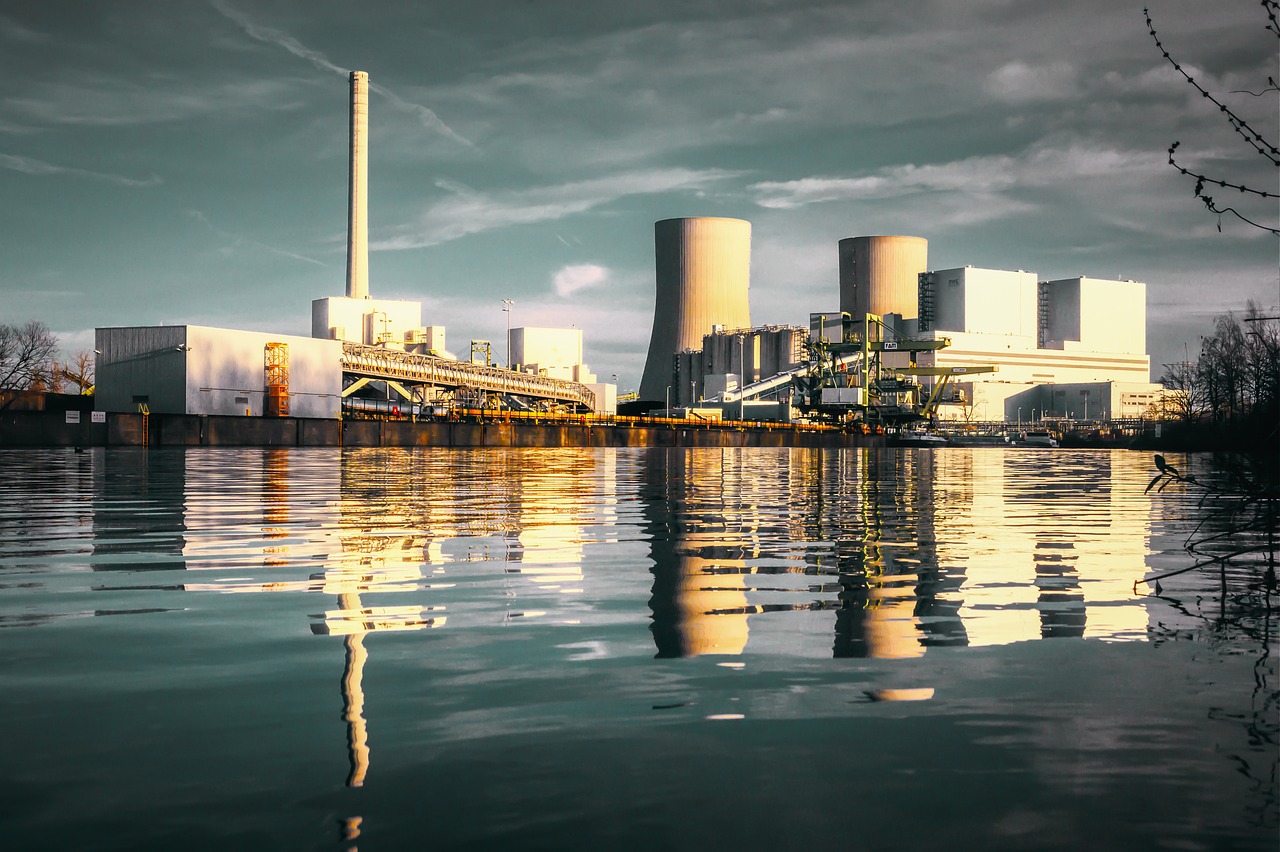
In the face of increasingly extreme weather disasters, the world is trying to break its dependence on fossil fuels such as coal. However, in regions that are heavily reliant on these fuels, the road to decarbonization is proving particularly difficult.
Take Indonesia as an example. As one of the world’s largest coal producers and exporters, the country’s energy system and economy are both highly dependent on coal. Over the past 20 years, accelerated urbanization has caused electricity demand to soar, and coal’s share in Indonesia’s energy mix has nearly quadrupled—from 13% in 2004 to 61% in 2021. Within a 100-kilometre radius of the capital Jakarta alone, there are ten coal-fired power plants in operation.
To break free from coal dependency, the Indonesian government pledged in its Nationally Determined Contribution (NDC) released in September 2022 to reduce carbon emissions by 31.89% by 2030, or by 43.2% with international support—targets that are even more ambitious than those set under the 2015 Paris Agreement. The government has also vowed not to approve any new coal-fired power plants from this year onward, to bring forward its carbon-neutrality goal by ten years to before 2050, and to double the share of renewable energy generation by 2030. However, Indonesia faces a host of political and economic challenges on its energy transition path.
First, the coal industry contributes around 5% of Indonesia’s GDP and employs roughly 250,000 people. Phasing out coal will affect state revenues, and vested interests are bound to resist strongly.
Second, moving away from coal will require huge sums of money. Decommissioning 118 coal-fired power stations in Indonesia is expected to cost about 50 billion Singapore dollars. Moreover, because many plants are not connected to the national grid and the data are incomplete, the authorities find it difficult even to assess the true scale of coal power generation.
In addition, at the end of last year Indonesia signed a “Just Energy Transition Partnership” (JETP) with Western developed countries. Under this initiative, at least US$20 billion in funding was pledged to help Indonesia end its reliance on coal-fired power by 2050. However, implementation of the plan has been repeatedly delayed. The parties have yet to reach consensus on governance arrangements, baseline data or the level of financing needed to curb greenhouse gas emissions, and the partnership has so far failed to put the world’s largest coal exporter on a clear path away from fossil fuels.
Like Indonesia, many ASEAN member states still rely on coal as a source of cheap energy to drive economic growth. However, a survey conducted by the ISEAS – Yusof Ishak Institute shows that more than 60% of respondents in ASEAN countries want their nations to stop building new coal-fired power plants. ASEAN countries are also working towards their self-determined decarbonization targets and striving to embark on a path of energy transition.
PART1
Hydrogen energy, as a secondary energy source that is increasingly in the media spotlight, has become a key candidate to replace fossil fuels in the future, and the development of the hydrogen economy in many countries is quietly accelerating.
On 28 August, the Malaysian government announced that it will roll out a “Hydrogen Economy and Technology Roadmap” this year, with the aim of making Malaysia a green hydrogen exporter by 2027. Prime Minister Anwar Ibrahim revealed in June that the “Hydrogen Economy and Technology Roadmap” is expected to generate 12.1 billion ringgit (about 3.52 billion Singapore dollars) in revenue and contribute between 49 billion and 61 billion ringgit to GDP by 2030. In addition, Minister of Natural Resources, Environment and Climate Change Nik Nazmi will table the “Energy Efficiency and Conservation Act” in Parliament, and the “Conditional Energy Audit Grant 2.0” will be incorporated into the 12th Malaysia Plan. These incentive and subsidy measures aimed at reducing carbon emissions will be progressively implemented by the Energy Commission of Malaysia before 2025.
On the same day, Indonesia also announced that its largest state-owned integrated fertilizer producer, PT Pupuk Indonesia, its subsidiary PT Pupuk Iskandar Muda, and the state-owned power utility PLN had signed a memorandum of understanding with Augustus, a German venture capital firm in the infrastructure and energy sector. Krikor, President of Augustus Global Investment, disclosed that Augustus will invest US$500 million next year to build a green hydrogen plant in Aceh Province, Indonesia, which is expected to produce 35,000 tonnes of green hydrogen annually. Construction of the plant will begin next year, with operations scheduled to start in 2026.
In Singapore, hydrogen was identified last year as a key element that must be integrated into the country’s energy transition. According to the report Charting the Energy Transition to 2050 released by the Energy 2050 Committee appointed by the Energy Market Authority, hydrogen as a major energy source could account for up to 60% of Singapore’s total energy demand in the future. Currently, Sembcorp Industries is working with Chiyoda Corporation and Mitsubishi Corporation of Japan to study the feasibility of developing a commercial-scale supply chain to transport decarbonised hydrogen to Singapore using Japan’s SPERA Hydrogen technology.
PART2
As economies develop, electricity demand in the ASEAN region continues to grow rapidly, and the share of renewable generation in the overall energy supply has been rising in tandem.
In Vietnam, solar and wind power have expanded quickly, supported by favourable feed-in tariff (FIT) schemes that remained in place until the end of 2021. Clean, renewable energy has helped offset the recent decline in coal-fired power generation, demonstrating Vietnam’s active implementation of its emission-reduction commitments. Since 2019, the country’s power generation mix has changed significantly, with the share of renewable generation (solar, wind and hydropower) increasing rapidly and even exceeding 48% in 2022. Thanks to a series of policies promoting renewable energy, the Vietnamese government has successfully raised the proportion of green energy to a region-leading level, well ahead of many countries with strong capabilities in this field, such as China, Australia and Thailand.
In Singapore, economic growth, the wider use of electronic devices and ongoing digitalisation have also driven a steady increase in electricity demand. Power plants account for as much as 40% of Singapore’s carbon emissions. To ensure security of electricity supply while gradually reducing emissions, on 8 September the Energy Market Authority (EMA) announced in-principle approval for five projects to import low-carbon electricity from Indonesia, with solar power exports to Singapore expected to begin by the end of 2027. This is another cross-border power supply project following the first imports of low-carbon electricity from Laos in June 2022. In March this year, EMA also granted in-principle approval for Keppel Energy to import low-carbon electricity from Cambodia. At the same time, a consortium of companies from Singapore and Vietnam is actively identifying suitable locations for wind power development, paving the way for future imports of wind energy from Vietnam.
Extreme heat is now posing a serious threat to global fuel supply systems. To curb global warming, and in line with the Paris Agreement, if the rise in global average temperature is to be kept within 1.5°C, countries must cut more than 20 billion tonnes of carbon dioxide emissions over the next decade and achieve global net-zero emissions by 2050.
Confronted with this “bold to-do list”, UN Secretary-General António Guterres issued a stern warning in a speech at UN headquarters in July: the era of global warming has ended, and the era of global boiling has arrived.
Amid relentless heatwaves, where does the road to decarbonization lead? In fact, there is only one answer: we can no longer hesitate, make excuses, or wait for others to act first. To avoid the most severe impacts of climate change, we must take bold and decisive climate action now.
※ The above content is compiled and edited by Johnny Cui Law Firm.
Reproduction or redistribution is permitted only with proper source attribution.